Showing posts with label garden. Show all posts

Saturday, July 17, 2010

Haymaking

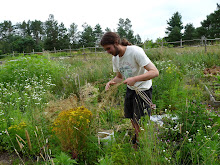
The garden is at its leafy, blossom-filled peak right now, and so are the weeds. The hot weather and regular rains that we've had since June have been a blessing for plants both domesticated and wild alike, it's all I can do to push the weeds back enough for the cultivated ones to take up a dominant place... this is not an immaculately tended garden by any means! The newly seeded hay meadows are a riotous, tumbling profusion of wild mustard, ragweed, goldenrod and bindweed, however after scything down these opportunistic meadow dwellers I've discovered a healthy carpet of my cultivated grasses, previously hidden from view - a good sign for next year.

Our own hay meadows are another year away from maturity (they were just seeded this spring after wresting the land from the forest a few years previous) but we have the good fortune of having a neighbour on one side who has more land in grass than the inclination to cut. We've been scything and making loose hay up in that field for the last couple of weeks, it's definitely a learning process for me. Following the very thorough instruction from the Vido Family (you can read one of the articles here) and from what they showed me last summer when I spent some time at their farm I built a couple of hay racks and then went at it. The rack construction is really simple, I made mine with scrap 1x3 lumber, although future models might be made from coppiced hardwood poles from the forest. They're basically two square frames leaning against each other (like an A-frame) and tied with twine at the top (they fold for easy storage and transport).

My current hay making process is to cut the grass and leave it in it's windrow for one full day. I initially planned to spread the windrows so the grass dries more evenly but I've found that mature timothy and orchardgrass (and other course, airy plant matter) dry just about as fast without spreading. After that time I rake the grass into heaps with a wooden hay rake (hand made from yurt-pole cutoffs and with wooden teeth which avoid digging into the ground - photos on the way) and stack it up on the racks, forming a hay cock. After it's stacked the grass continues to dry with air circulation underneath it, and the bulk of the grass on the inside won't fry to brown in the sun like it would if exposed. I take the hay into the barn as soon as I can, though if built with enough skill a cock (or any other version of hay stack) can stay in the field and for some time without getting damaged by rain. I haven't yet mastered the cap design (ideally it should shed water like a thatch roof) and the cock pictured here got soaked in that last thunder storm we had. It was wet and steaming away like a compost pile from microbial activity when I dealt with it a few days after, it made an excellent mulch for the tomato patch! So there's lots to learn yet... I'll keep at it between weeding and tomato staking and the myriad other jobs on the mid-summer farm.




Monday, June 28, 2010

New Photos


-An interesting experiment of mine: the potatoes on the left had fresh comfrey leaves buried in the trench with them at planting time, the ones on the right didn't. The comfrey provides a big boost of nitrogen in early spring at a time when not much is available to growing plants due to the cool soil and slow micro-organism activity.


-Green Oakleaf Lettuce


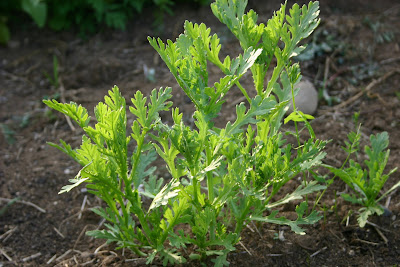
-Shungiku, an edible chrysanthemum.


-This is an exciting new plant: Chinese Salad Mallow. The young leaves like these are tender and great in salads like lettuce, older leaves even make edible bowls.


-A sea of lettuce


-Spinach going to seed

Of Deer, Greenhouses and Seed Workshops

Finally, some welcome rain and a much needed opportunity for some writing! The garden is growing better than ever this time of year, it seems like every time I look at a plant it's twice the size it was last time. Around here this is the season of weeding and staking, watching things grow and best of all of endless salads. Life in the yurt has been fantastic (I still promise that construction write-up soon!), although it seems to have had the unintended consequence of deterring the deer from the upper field only to drive them into the lower field and the main seed garden. The damage wasn't too severe, a few peas got nibbled and are now re-growing. Ever since I built my funky, improvised deer fence last week out of tomato stakes, twine, surveyors tape and pie plates the garden seems to be secure.


The greenhouse is finally coming together too. The frame is nearly finished now, it's just a matter of finishing the ends (we're having wooden ends with wide double doors) and waiting for a totally still day to throw the plastic over.


Also in the works is a very exciting series of seed saving workshops with both myself and my friend and mentor Dan Jason from Salt Spring
Seeds. Dan is coming out here in late August and we'll likely be giving three separate workshops around the province (details to follow!) the biggest one and the one that's all confirmed is the Watershed Farm Music Festival on August 28th. Organized by Pollination Project at Watershed Farm, we'll have music all day on Saturday the 28th along with organic growing and seed saving demos throughout the day. The following day Sunday will be a smaller, quieter and more in-depth course with the two of us, check out the details: pollinationproject.com/eventsview.php?eventID=85 . I'll keep everyone posted when we decide on the details for the other courses!


Also, here's a photo I've been meaning to share from my time as a guest on The Weekend Gardener the other week. Niki Jabbour hosts the show every Sunday from 11:00 to 1:00 on 95.7 FM in Nova Scotia. I ended up going in to the studio for the interview, which was a ton of fun with such a knowledgeable gardener as Niki. Check out her blog too.

Next up is a weeklong farm tour of sorts to New Brunswick, there's a lot to organize on this rainy day...

Saturday, July 25, 2009

Intensive Succession Planting

If you really want to maximize your harvest from a small plot of land (and I think most readers do) you should definitely think about planting multiple crops in succession in the same spot over the growing season. Too often people (myself included) plant a crop in the spring, harvest it in say late July, and then leave the ground bare into the fall, not realizing the potential for late-summer/fall growing. In our food garden today we removed and composted the old pea vines, tilled in the weeds and debris and then created two long planting strips in the beautiful dark Earth.

We'll let the planting area sit and mellow for roughly a week (maybe less if we can't wait) before we plant salad greens and a fall crop of carrots. That gives the leafy green debris that was tilled in a chance to decompose a bit before we plant. We could have also tilled the full pea vines into the soil, returning them directly. If we did that we would probably have to wait a bit longer to plant the succeeding crop. As fibrous plant matter decomposes the microbes actually draw the available nitrogen from the soil and tie it up, not a good thing for any crops that you're trying to grow simultaneously. I think it's best to haul the plant matter away to the compost (to be spread on the same soil later of course) if really intensive growing is your goal.

In the Annapolis Valley there is still plenty of time to plant lettuces, spinach, carrots, kohlrabi, most leafy brassicas, turnips, chard, beets and even early maturing peas. Alternatively you could also plant green manure crops to enrich the soil after the main crop is finished. I like to plant buckwheat to succeed my pea seed crop which comes out in August. The buckwheat gets tilled back in to the soil in September or October when it's flowering, feeding an influx of organic matter to the abundant soil microbes and earthworms.
Before: picking up the pea stakes before scything down the plants.


Taking a post-scything pea break:
Incorporating organic matter while creating an annual plant promoting soil disturbance (that's a lot of words to decribe tilling).

After: the finished bed ready for planting.
(Thanks to Regine for the photos!)

Tuesday, June 30, 2009

The Mid-Summer Garden

A rainbow over the soybeans:


The recently staked pole bean patch:


Triple Treat Peas:

Russian Sugar Peas:


Golden Sweet Peas (red flowers and edible yellow pods):

Early Wonder Tall Top Beets: